Search fund · Self-storage · Qualified Opportunity Fund

Acquiring Self-Storage Assets in America's Emerging Growth Markets

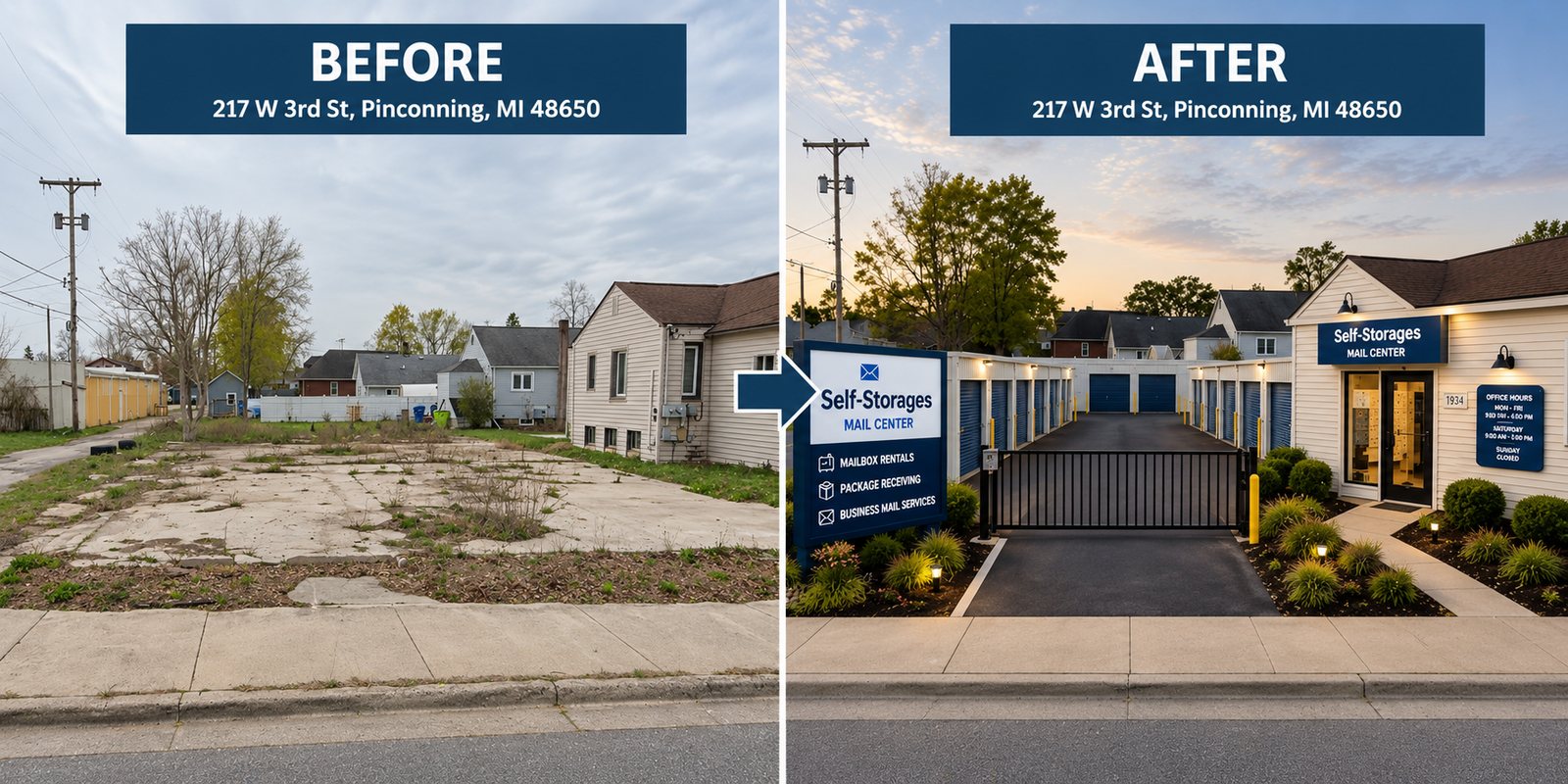
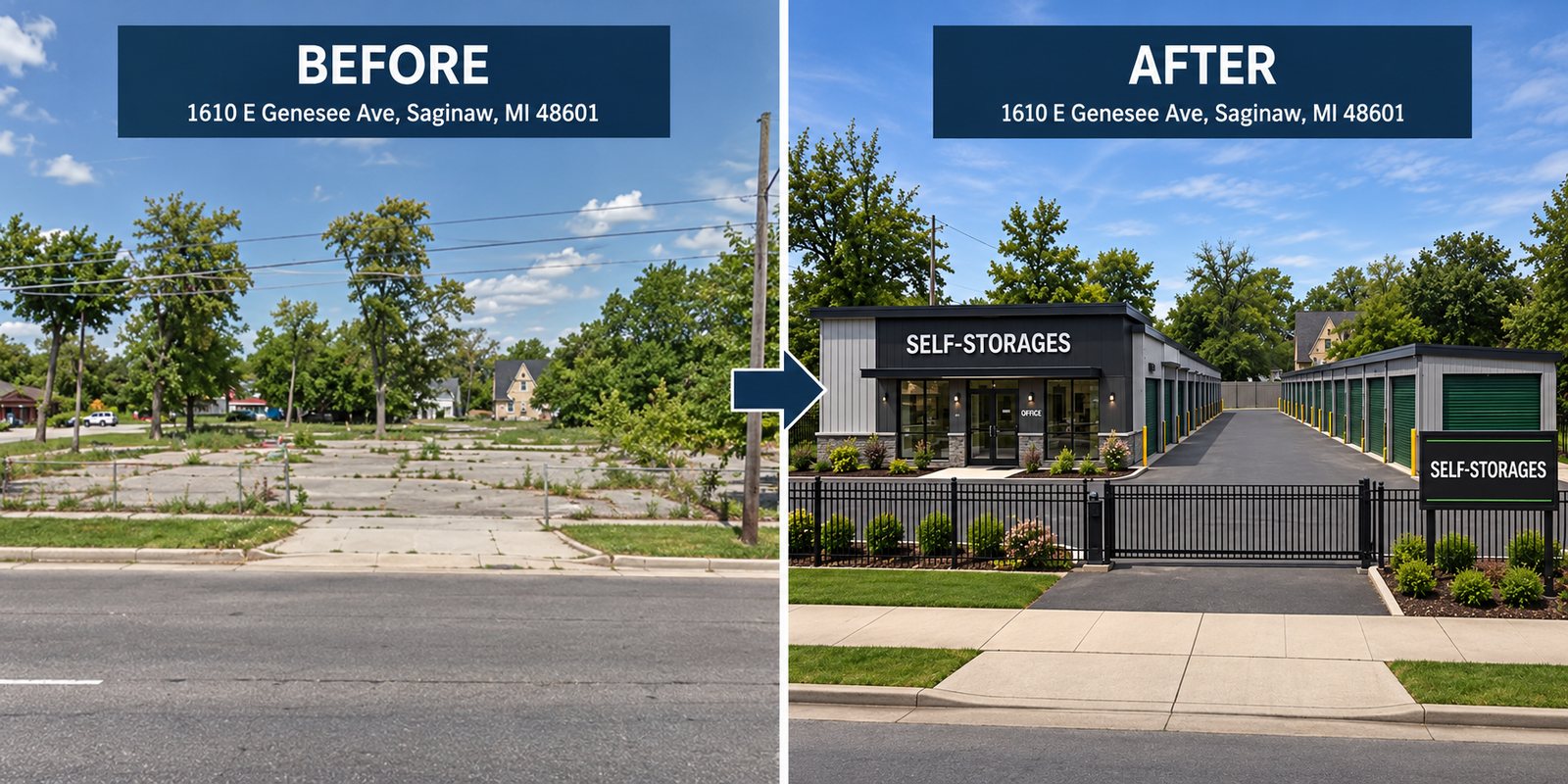
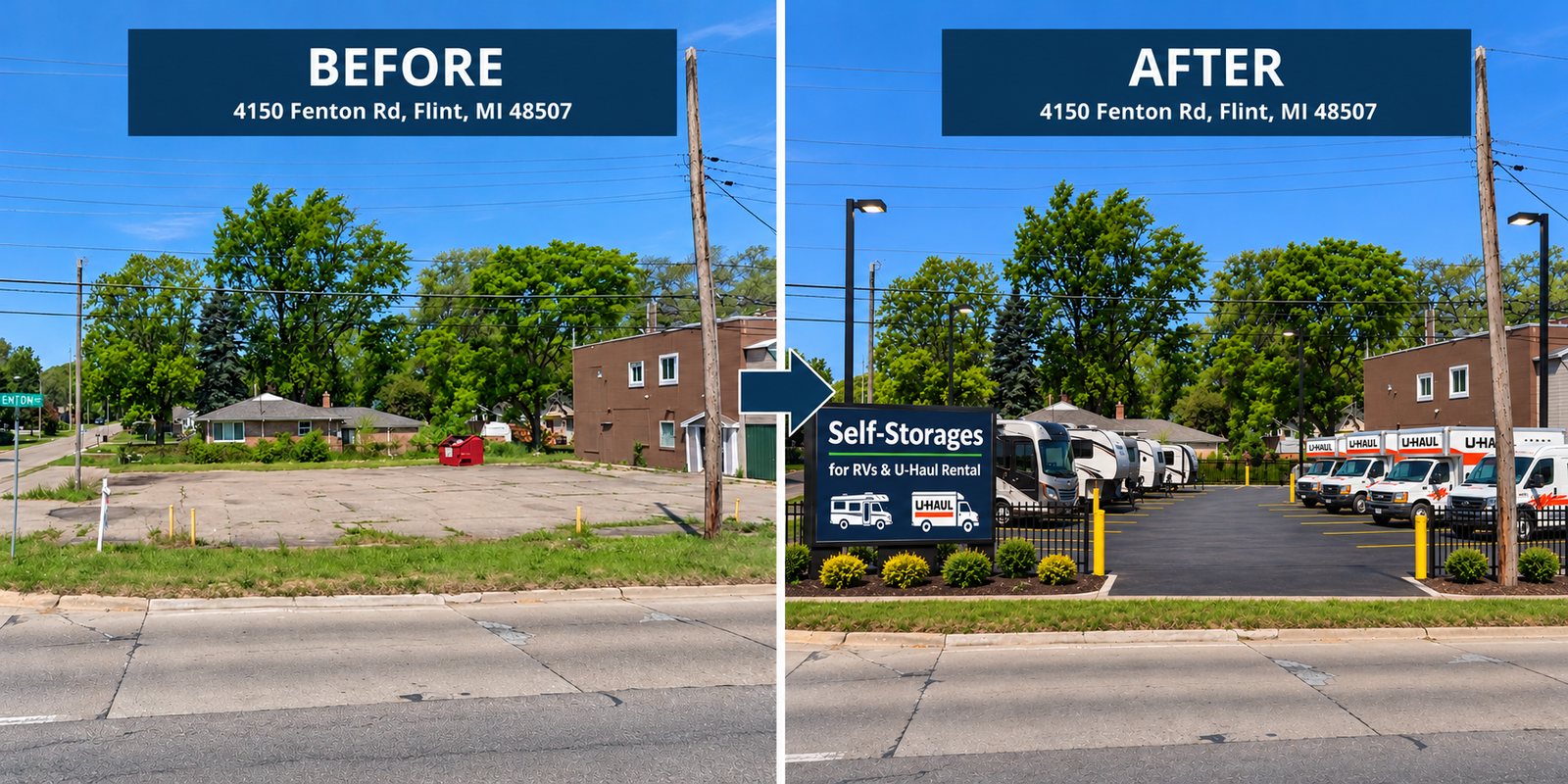
We buy established, independently owned self-storage facilities — businesses that already have tenants, rent rolls and cash flow — and we hold them inside a Qualified Opportunity Fund.

Two returns, one asset. One comes from running storage better — pricing, occupancy, security, ancillary revenue. The other comes from the Opportunity Zone structure: deferral on the gain you roll in, and no federal tax on the fund's own appreciation at ten years.

Nomination window
Open now
Governors began nominating tracts July 1, 2026 under the OBBBA decennial process.
New map effective
Jan 1, 2027
Runs through Dec 31, 2036, then redesignates.
2018 map sunset
Dec 31, 2028
A two-year overlap between the current and the incoming map.
Rural improvement test
50% of basis
Halved from 100% for entirely rural zones, effective July 4, 2025.

The investment model

Search. Acquire. Improve.

A search fund is small and operator-led. Instead of buying at auction, we find one good business at a time and then run it ourselves. Storage rewards that: it is a fragmented industry of owner-operators, most of whom have never repriced a unit with software.

A-01 / SEARCH

Find the operator who wants out

We source directly, not from broker inventory. The target is a facility owned by one family, often for decades, in a market too small to interest institutional capital.

  • Direct owner outreach; broker and intermediary relationships
  • Tract-level screening against the designated map
  • Rent roll, delinquency and local supply diligence
B-02 / ACQUIRE

Buy the business, structure the hold

We buy the business and the real estate together, through a qualified opportunity zone business owned by the fund. The improvement budget is committed at closing, because an acquired building only qualifies once it has been substantially improved inside 30 months.

  • Negotiated purchase; seller financing considered
  • Improvement plan sized to the substantial improvement test
  • Environmental, title, survey and zoning diligence
C-03 / IMPROVE

Run it like a business, not a parking lot

Most independent facilities are underpriced, undermarketed and under-secured. The improvement plan is also what satisfies the Opportunity Zone requirement — the capital that qualifies the asset is the capital that raises its value.

  • Rate setting and existing-customer increases
  • Online move-in, autopay, paid search and maps listings
  • Gate controllers, smart locks, cameras, lighting
  • Ancillary revenue: tenant protection, retail, truck rental
  • Expansion on excess land

Why storage

A storage facility is priced off one number.

Net operating income. Rent collected, minus the cost of running the place — then divided by a cap rate to get a value. What makes storage unusual is how fast that number can move. Leases are month-to-month, so a rate change reaches the bottom line in weeks rather than at the end of a ten-year lease. Payroll is thin and tenant improvement costs are effectively nil, so most of an increase falls straight through to NOI instead of being eaten by expenses.

Move the dials
Doors300
Average rate / month$95
Occupancy85%
Operating expenses35%
Cap rate7.0%
What that produces
Rent collected / year
Cost to run it
Net operating income
Implied value at that cap rate

Illustrative arithmetic on figures you set — not a projection, a forecast, or a description of any actual facility. The starting numbers are round placeholders, not market data; replace them with figures from a property you are looking at. Real facilities carry debt, taxes, capital expenditure and lease-up risk that this leaves out entirely.

Target geography

Where the doors are, and where the zones are.

Our search runs across secondary and rural markets in the Sun Belt, Mountain West and Southeast — places with household formation and in-migration, but without the institutional storage development that has compressed returns in the top 50 metros.

AK ME VT NH WA ID MT ND MN IL WI MI NY MA RI OR NV WY SD IA IN OH PA NJ CT CA UT CO NE MO KY WV VA MD DE AZ NM KS AR TN NC SC DC OK LA MS AL GA HI TX FL
Primary search geography Secondary watch list Not currently searched
A schematic, not a designation map. These states are where we search. They do not indicate designated tracts — designation happens at census-tract level, and the map effective January 1, 2027 is still in nomination. Every property is screened against the official Treasury and CDFI Fund lists at underwriting.

What we look for in a market

  • GrowthMetro or micropolitan areas of roughly 25,000–250,000 and the rural counties beside them, with in-migration we can verify in Census data.
  • SupplySquare feet per capita below the national average, with little new construction entitled nearby.
  • DemandA concrete reason people need storage — a hospital, a base, a plant, a wave of new apartments.
  • Zone statusInside a designated Opportunity Zone, with a strong preference for entirely rural tracts.

The rural preference is deliberate. Since July 4, 2025, property in an entirely rural Opportunity Zone needs improvements exceeding 50% of adjusted basis rather than 100%. For a strategy built on buying existing buildings, that halves the capital required to make an acquisition qualify.

Acquisition criteria

If your facility fits behind these doors, we want the call.

Indicative, not exhaustive. We look outside these ranges when the market or the seller's situation warrants it — and we answer quickly either way.

¼ acre to several acres

Site area, not door count. A quarter-acre corner lot with 40 units counts; so does a multi-building site of several acres. Roughly 5,000–125,000 net rentable square feet.

$400K–$15M

Single facilities and small portfolios. The low end exists because a small rural site can still be a good business; above the high end, the national operators start bidding.

Profitable today

Trailing twelve months of real collections, not a pro forma. We buy existing businesses, not lease-ups.

65%+ physical

Stabilized or close to it. A gap between physical and economic occupancy isn't a problem — it's usually why we're interested.

In or near a zone

Inside a designated Opportunity Zone tract, ideally an entirely rural one. We also look at sites near tracts we expect on the 2027 map.

Room to improve

Below-market rates, no online move-in, weak security, no tenant protection, or land to expand on. Deferred maintenance is welcome — the improvement spend is required anyway.

How capital flows

From a capital gain to a rented unit.

Four steps, each governed by a test. The diagram below is a simplified illustration of a two-tier Opportunity Zone structure; the fund's actual structure, terms and tests are described only in its offering documents.

STEP 01

Investor rolls a gain

An investor with a realized capital gain elects to defer it by investing the gain amount into the fund.

Test: investment generally within 180 days of the gain.
STEP 02

Qualified Opportunity Fund

The fund is self-certified with the IRS and holds the capital pending deployment into acquisitions.

Test: 90% of fund assets in qualified opportunity zone property, measured semi-annually.
STEP 03

Operating company (QOZB)

A subsidiary business owns the facility and runs it — leasing, collections, staff, vendors, ancillary lines.

Tests: 70% of tangible property qualifying · 50% of gross income from within the zone · working capital safe harbor.
STEP 04

The self-storage facility

Land, buildings, doors, gates, cameras and the capital improvements that qualify the property.

Test: substantial improvement — additions to basis exceeding 100% of the building's adjusted basis within 30 months, or 50% in an entirely rural zone.

↳  WHY IT MATTERS: an existing storage facility fails the "original use" test the moment we buy it, because someone else used it first. Substantial improvement is therefore not optional in this strategy — it is the mechanism that makes an acquired building qualify. That is precisely why the rural 50% threshold shapes where we search.

Opportunity Zone investing

The benefits, and the reasons this can go wrong.

Written for someone deciding whether to spend an hour on a subscription document. The tax rules here are general, current as of July 2026, and subject to further Treasury and IRS guidance.

Potential benefits
  • Your gain is deferredA capital gain reinvested in a qualified opportunity fund isn't taxed at the time of investment. For investments after December 31, 2026, deferral runs on a rolling five-year clock from your own investment date, with a 10% basis step-up at the end of it — 30% for a qualified rural opportunity fund.
  • The fund's own growth can go untaxedHold at least ten years and make the fair market value election, and appreciation in the qualifying investment can escape federal capital gains tax. For post-2026 investments that election is capped at 30 years.
  • A lower bar in rural zonesIn entirely rural zones the substantial improvement threshold is 50% of adjusted basis rather than 100%, effective July 4, 2025 — materially less capital to qualify an acquired building.
  • Rent arrives either wayThe underlying business collects monthly whether or not the tax treatment performs as expected. And the programme is now permanent, redesignating every ten years, so the pipeline isn't racing a sunset.
Risks and limitations
  • Illiquidity measured in decadesThe ten-year hold that produces the headline benefit is also a ten-year lockup. No public market, restricted transfers, and no ability to withdraw.
  • Designation riskThe OBBBA criteria are stricter than 2018's. Tracts we target may not be nominated, certified, or may lose eligibility — and the two-year overlap between the old and new maps has to be navigated correctly.
  • Failing a testThe 90% asset test, 70% tangible property test, 50% gross income test and the 30-month improvement window each carry penalties or loss of qualification. Reporting failures draw penalties up to $10,000 per return, or $50,000 for funds over $10 million.
  • Storage is not risk-freeNew supply can be built fast and arrive with little warning. Month-to-month leases reprice down as easily as up, and a soft housing market reduces move-ins. Because acquired buildings must be substantially improved, part of your capital goes into construction rather than into buying cash flow.
  • Blind pool, leverage, and rules that moveYou commit before facilities are identified and rely on the manager's judgment; a few facilities in a few markets is not diversification. Debt magnifies loss as well as gain. Guidance is still being issued and could change outcomes retroactively. Investors who rolled gains in before 2027 must generally include the remaining deferred gain in income for the year including December 31, 2026, and cannot re-defer it. A tax benefit does not rescue a bad acquisition.

Get in touch

Two doors in.

Investors looking for fund information use the left form. Owners, brokers and intermediaries with a facility to sell use the right form. Everything submitted is treated as confidential.

01 / Investors

Request fund information

Tell us a little about your situation and timing. We will follow up directly. Submitting this form does not create an investment, an obligation, or an adviser relationship.

This is a request for information only. It is not an offer to sell or a solicitation of an offer to buy any security, and it is not tax or investment advice.

02 / Owners & intermediaries

Submit a self-storage facility

Send what you have. A rough rent roll and a trailing P&L are enough for a first read, and we will come back with a yes, a no, or a question — usually within a week.

Please do not send confidential tenant information or documents subject to a confidentiality agreement through this form. We will sign an NDA before receiving detailed financials.